


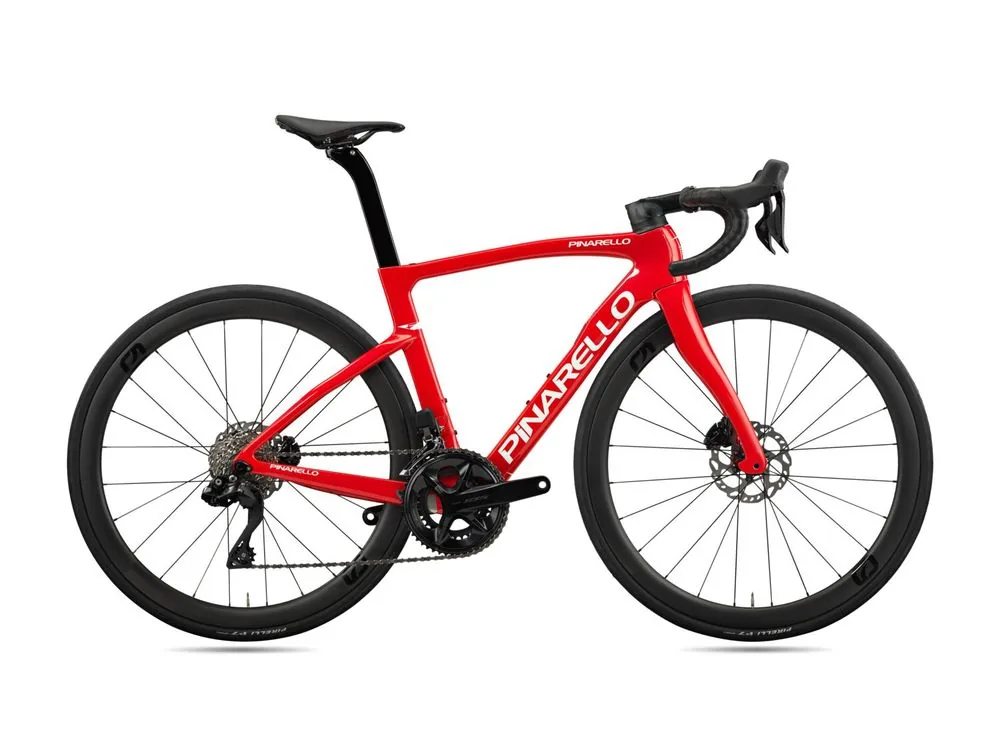
Used Pinarello Bikes for Sale in the UK
Looking for a used or second-hand Pinarello? Browse Pinarello bikes for sale from private sellers and shops across the UK. Every listing with a frame number is checked against a stolen-bike registry and rider-filed theft reports before it goes live.

About Pinarello
Watch the Tour de France and count the Pinarellos. No brand has won more Grand Tours. Froome, Thomas, Bernal, Pogačar: the yellow jersey keeps finding its way onto riders sitting on bikes from Treviso. This isn't marketing coincidence but decades of Italian engineering focused on one goal: winning bicycle races.
The Dogma occupies a unique position in cycling. Professional racers ride the same frames you can buy. There is no dumbed down consumer version. The asymmetric design compensates for drivetrain forces, the wavy fork is functional rather than decorative, and the carbon layup comes from actual race development rather than marketing departments. You pay handsomely for this privilege.
British cyclists face a choice with Pinarello. The performance is proven at the highest level. The aesthetics are distinctively Italian. The price is genuinely premium. Whether that combination makes sense depends entirely on what you want from a bike. Some riders happily pay more for functionally identical performance from prettier bikes. Others view the premium as excessive. Pinarello attracts the former and remains unapologetic about it.
Pinarello bikes currently start from £2,550 and run up to £3,750 across the marketplace.
Founded1952
HeadquartersItaly
Specialises inRoad Bikes, Time Trial Bikes, Gravel Bikes, Electric Road Bikes
Price range£3,000 to £15,000+
Best forSerious road cyclists who want Tour proven performance and Italian prestige
Popular modelsDogma F, Dogma X, Paris, Grevil, Bolide, F Series, Prince
What to look for when buying a used Pinarello
Pinarello bikes are best for serious road cyclists who want tour proven performance and italian prestige.
When buying any used Pinarello, start with the basics. Check the frame for cracks, dents, or damage, especially around the head tube, bottom bracket, and dropout areas. Look at the drivetrain for wear and make sure the gears shift cleanly through the full range.
Ask the seller for service history and proof of ownership. Every Pinarello listed on Cyclesite is automatically checked against a stolen-bike registry and rider-filed theft reports, but it is always worth checking the frame number yourself too.
Typical Pinarello pricing on the used market sits in the £3,000 to £15,000+ bracket. Anything notably outside that range is worth a closer look.
Pinarello year-by-year guide
Giovanni Pinarello was a professional cyclist before founding the brand in Treviso in 1952. Pedro Delgado won the first Pinarello Tour de France in 1988 and victories have accumulated ever since. The Dogma became legendary through riders like Froome and Pogačar. LVMH investment arrived in 2016 but headquarters remain in Treviso.
Shop Pinarello by Category
Popular Pinarello Models
Brands like Pinarello
Other brands buyers cross-shop with Pinarello, with bikes available now on Cyclesite.
Pinarello Tools & Resources
Pinarello Sold PricesSee what Pinarello bikes have sold for recentlyValue Your PinarelloSee typical used Pinarello values and what your bike is worthStolen bike checkCheck any Pinarello frame against stolen-bike databasesWhere is the frame number on a Pinarello?Find and read the frame number on a Pinarello before you buy, sell or register itPinarello Size GuideFind the right Pinarello frame size for your heightUsed Pinarello BikesBrowse pre-owned Pinarello bikes for sale
Pinarello Bikes, Your Questions Answered
Tour de France development, Italian design, asymmetric frame technology, and premium positioning. You are buying genuinely race proven bikes: the frames professionals ride to Grand Tour victories. The prestige premium is real and Pinarello makes no apology for it.
The drivetrain loads the right side of a frame more than the left. Pinarello compensates by making the drive side stiffer. This is engineering serving performance, not aesthetics. The visual asymmetry follows functional asymmetry.
The Dogma F is what Pogačar rides to Tour victories: the flagship, the fastest, the most expensive. The Paris suits endurance riding with more comfort. The Prince brings Dogma technology to a lower price point. The Grevil handles gravel with Italian style.
Design and engineering happen in Treviso. Manufacturing involves Asian facilities like virtually every premium brand. Italian quality standards guide production regardless of location. The most expensive Dogma frames maintain stronger Italian manufacturing involvement.
Browse used and second-hand Pinarello bikes for sale from private sellers and shops across the UK on Cyclesite. Every Pinarello listing is checked against a stolen-bike registry and rider-filed theft reports before it goes live, so you can buy second-hand with confidence.
Brands Similar to Pinarello


Pinarello Bikes by Location
Find Your Perfect Pinarello
Browse 2 verified Pinarello bikes on the UK's trusted marketplace.