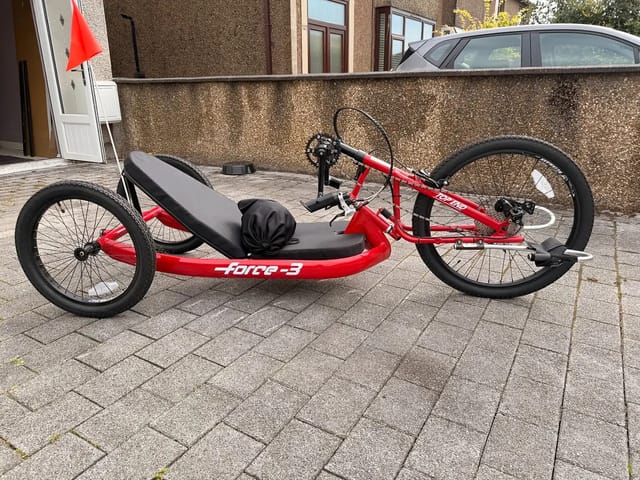
The handcycle was purchased by my daughter who has now died, which is the reason for not having formal paperwork, etc. She never got the opportunity to use it (except for one occasion - a very short…
1 adaptive bikes for sale on Cyclesite from UK sellers. Prices start at £4,295. A typical adaptive bike sits around £1,000-£2,500 - Adult adaptive trikes and entry handcycles. Every listing with a frame number is checked against a stolen-bike registry and rider-filed theft reports before it goes live.
Live listings
1
Cheapest right now
£4,295
Typical price
£1,000-£2,500 - Adult adaptive trikes and entry handcycles
Common questions
Any cycle designed for a disabled rider. In practice that means handcycles, hand-powered attachments that dock to a wheelchair, adaptive trikes with foot or trunk support, side-by-side and companion cycles, and wheelchair transporter cycles. A standard trike or recumbent bought by a disabled rider is not usually described as adaptive, which is why we list those separately.
VAT relief applies to purchases from a VAT-registered supplier of equipment designed solely for disabled people. A private second-hand sale between individuals has no VAT on it in the first place, so there is nothing to relieve. The practical point is that when you compare a used cycle to a new one, compare it to the zero-rated new price if you qualify. HMRC guidance sets out the conditions, and a supplier will ask you to complete a short eligibility declaration.
Fit matters more here than on any other kind of cycle, and it is far more individual. Ask the seller for the current measurements and how far each adjustment travels, and where possible arrange to try it. If the cycle was built to order for its previous rider, check with the manufacturer or a specialist dealer whether it can be re-fitted before you commit.
Yes. Adaptive cycles have the same access rights as any other cycle. The practical obstacle is width, since chicanes, A-frames and kissing gates on some UK paths were installed without wider cycles in mind. Wheels for Wellbeing campaigns on exactly this and publishes guidance on inclusive infrastructure.